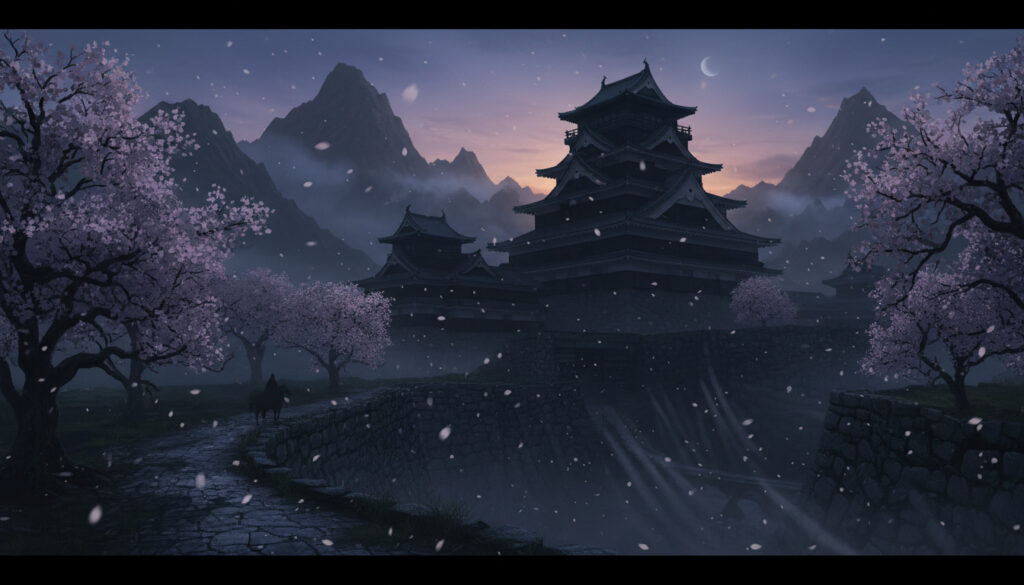
Assassin’s Creed Shadows – Test und Erste Eindrücke
Assassin’s Creed Shadows: A Dual-Bladed Return to Form
Ubisoft is sharpening its hidden blade for a long-awaited destination. Assassin’s Creed Shadows transports the franchise to feudal Japan during the volatile late Sengoku period, delivering a split narrative between two protagonists who embody contrasting philosophies of war. After years of fan requests for a Japanese setting—often dismissed as “too obvious” by former creative directors—the February 14, 2025 release marks a pivotal moment for the series.
Essential Details
- Release Date: February 14, 2025
- Platforms: PlayStation 5, Xbox Series X/S, PC, Mac
- Setting: Japan, 1579 (Late Sengoku Period)
- Protagonists: Naoe (Shinobi) and Yasuke (Samurai)
- Engine: Anvil Pipeline
Dual Perspectives on a Fractured Land
The creative team at Ubisoft Quebec has abandoned the single-hero template in favor of intertwined destinies. Naoe represents the classic Assassin’s Creed fantasy—stealth, parkour, and precision strikes—while Yasuke introduces brute-force combat mechanics previously unseen in the franchise. This mechanical divergence serves the narrative: Naoe fights for the hidden ones, operating from shadows and treetops, whereas Yasuke moves through the world as a visible, armored tank capable of shattering enemy defenses.
The historical authenticity extends beyond aesthetics. Ubisoft’s official reveal confirms that the team consulted historians and cultural experts to capture the political complexity of 1579 Japan, a year when Oda Nobunaga’s consolidation of power created widespread instability.
| Feature | Naoe (Shinobi) | Yasuke (Samurai) |
|---|---|---|
| Combat Style | Stealth, assassinations, gadgets | Heavy melee, weapon mastery |
| Movement | Parkour, grappling hook, prone | Grounded, deliberate, powerful |
| Narrative Role | Hidden One, seeking vengeance | Retainer serving Nobunaga |
| Armor | Light, concealable | Heavy, customizable plating |
Mechanical Evolution
Shadows introduces several systemic changes to the decade-old formula. The gameplay demonstrations shown to IGN reveal a fully dynamic weather system and seasonal cycles that alter gameplay possibilities. Winter snows leave visible footprints, forcing stealth players to reconsider approach vectors, while summer foliage provides dense cover for infiltration.
The lighting engine has been rebuilt from the ground up. Light sources are no longer cosmetic; they define detection mechanics. Extinguishing candles and shooting down lanterns creates darkness, but enemies respond by relighting areas or bringing torches. This shift transforms light itself into a resource to be managed, particularly during Naoe’s missions.
Combat mechanics diverge sharply between protagonists. Yasuke can break through wooden barriers and enemy shields, utilizing kanabo clubs, katana, and matchlock rifles. Naoe relies on the classic hidden blade, kusarigama chains, and new tools like the tsuba-shuriken hybrid. The hands-on coverage from PC Gamer notes that switching between characters occurs at hideouts, not mid-mission, forcing players to commit to specific playstyles for each objective.
Development Timeline and Technical Context
Development commenced shortly after the completion of Assassin’s Creed Valhalla in 2018, making this the longest production cycle in franchise history. The game serves as the debut title for Anvil Pipeline, Ubisoft’s new unified engine designed to streamline development across all studios and platforms.
Key milestones include:
- September 2022: Project code-named “Red” officially confirmed
- May 2024: Full reveal with cinematic trailer
- June 2024: Extended gameplay debut at Ubisoft Forward
- September 2024: Release delayed from November 12 to February 14 for “final polish”
The delay announcement via GameSpot cited the need for additional optimization rather than fundamental redesign, suggesting the team is prioritizing technical stability over feature creep.
Addressing the Yasuke Controversy
The decision to feature Yasuke—a documented African retainer of Oda Nobunaga—has generated significant discourse regarding historical representation. Primary sources confirm Yasuke’s existence in Japanese records from 1579-1582, though details of his military service remain partially obscured by time. Historical analysis from Eurogamer clarifies that while Nobunaga did grant Yasuke a stipend and weaponry, his exact status as a “samurai” remains debated among scholars.
Ubisoft’s narrative team has acknowledged taking creative liberties with Yasuke’s combat role while maintaining his core historical context as a foreigner navigating Japan’s rigid caste systems. The game portrays his outsider status as a narrative asset, allowing him to question the era’s political structures while remaining bound to bushido codes.
Critical Analysis
Assassin’s Creed Shadows represents a calculated risk for Ubisoft. The dual-protagonist structure addresses a franchise-long tension: the divide between stealth purists who lament the series’ shift toward action-RPG conventions, and players who prefer the aggressive combat of recent entries. By segregating these mechanics into distinct characters, the design team avoids the compromise that diluted previous titles.
However, this solution introduces narrative challenges. Previous entries with multiple protagonists—Syndicate’s Frye twins, Odyssey’s Alexios and Kassandra—struggled to give both leads equal dramatic weight. Early previews suggest Shadows attempts to solve this by making Naoe and Yasuke’s stories interdependent rather than parallel, with each character’s missions directly impacting the other’s objectives.
Developer Insights
“We didn’t want to make another game where you can do everything with one character. Naoe and Yasuke are deliberately limited in specific ways. When you’re playing Yasuke, you can’t climb certain surfaces. When you’re Naoe, you can’t smash through barricades. These restrictions force you to engage with the world differently.”
— Jonathan Dumont, Creative Director, Ubisoft Quebec
“The seasons aren’t just visual. We built the entire lighting system around the idea that Japan changes dramatically throughout the year. A village that’s easily infiltrated in spring becomes an exposed death trap in winter when the leaves fall.”
— Luc Plante, Art Director
Final Assessment
Assassin’s Creed Shadows arrives at a critical juncture for the franchise. Following the mixed reception of Valhalla’s bloated expansions and the underperformance of Mirage’s return to basics, Shadows must justify the extended development cycle through technical innovation and narrative coherence. The PlayStation Blog deep-dive highlights ray-traced global illumination and photogrammetric assets as technical achievements, but the lasting value will depend on whether the dual-protagonist structure serves the story or merely functions as a marketing hook.
For players awaiting the Japan setting promised since 2012’s cryptic Abstergo emails, the wait ends February 14. Whether Shadows restores the franchise’s reputation for historical immersion or merely checks another locale off the wishlist will depend on execution, not ambition.
Frequently Asked Questions
Is Assassin’s Creed Shadows a live-service game?
No. Despite Ubisoft’s recent pivot toward live-service models with titles like Skull and Bones and XDefiant, Shadows remains a traditional single-player narrative experience. The game includes a Discovery Tour mode for educational exploration, but no ongoing seasonal content or battle pass mechanics have been announced.
Can I complete the entire game with one protagonist?
No. While you can choose which character to play for most side content and open-world activities, critical path missions require specific protagonists. Certain story beats are locked to Naoe’s stealth campaigns, while others demand Yasuke’s combat capabilities. The game forces alternation between the two to progress the overarching narrative.
Will the game feature modern-day segments?
Yes, though Ubisoft has remained tight-lipped about specific details. The Animus remains the framing device, with Layla Hassan’s successor presumably continuing the present-day narrative thread established in Valhalla. Reports from Kotaku suggest these sections will be optional for players focused purely on the historical narrative.
What is the file size and installation requirement?
Ubisoft has confirmed the PC version requires approximately 100GB of storage space, with PlayStation 5 and Xbox Series X/S versions expected to fall within similar ranges. The game supports texture streaming to reduce initial download sizes on consoles.
Weitere verwandte Artikel
 Walter Gunz: Vermögen, Biografie und aktuelles Leben
 Kaia Gerber: Beziehungen, Gesundheit und Karriere – alle Fakten
 Vanessa Williams: Biografie, Karriere, Krankheit & Gewichtsverlust
 Mark Kerr: Der wahre ‘Smashing Machine’ – Biografie und Sucht
 Frankie Muniz: Warum er Schauspielerei aufhörte und NASCAR fährt
 Bettina Tietjen: Leben, Karriere, Ehemann, Bücher und mehr
 Sol de Janeiro 39 – Test, Preise und Erfahrungen
 Hit Me Hard and Soft: Album, Konzertfilm 2026 und Bedeutung